How to size a C&I
energy storage cabinet.
Buying storage is not about matching a nameplate number to a tariff. It is about matching the kW you want to shave, the hours you must cover, and the chemistry that will still be earning in year ten. This guide walks through the calculation an engineer actually performs.
Measure the peak,
not the average.
Storage is paid back by shifting energy away from expensive hours. You need a load profile with at least half-hour resolution before sizing anything.
Peak demand (kW)
The highest sustained demand you want to clip. This is the power rating your PCS must deliver — a 125 kW cabinet can shave up to roughly 125 kW.
Hours to cover (h)
How long the peak lasts. A two-hour evening peak at 200 kW needs about 400 kWh of usable energy, not 400 kWh of nameplate.
Depth of discharge
LFP cabinets are typically rated around 90–95% DoD. Divide the usable energy by DoD to get the installed capacity.
Round-trip efficiency
At ≥98% RTE, losses are small but real. Include them so you do not undersize on the discharge side.
261 kWh or
418 kWh?
A site with a 110 kW peak lasting two hours wants to shave 100 kW for the full window.
- Usable energy needed: 100 kW × 2 h = 200 kWh
- Installed capacity at 90% DoD: 200 / 0.9 ≈ 222 kWh
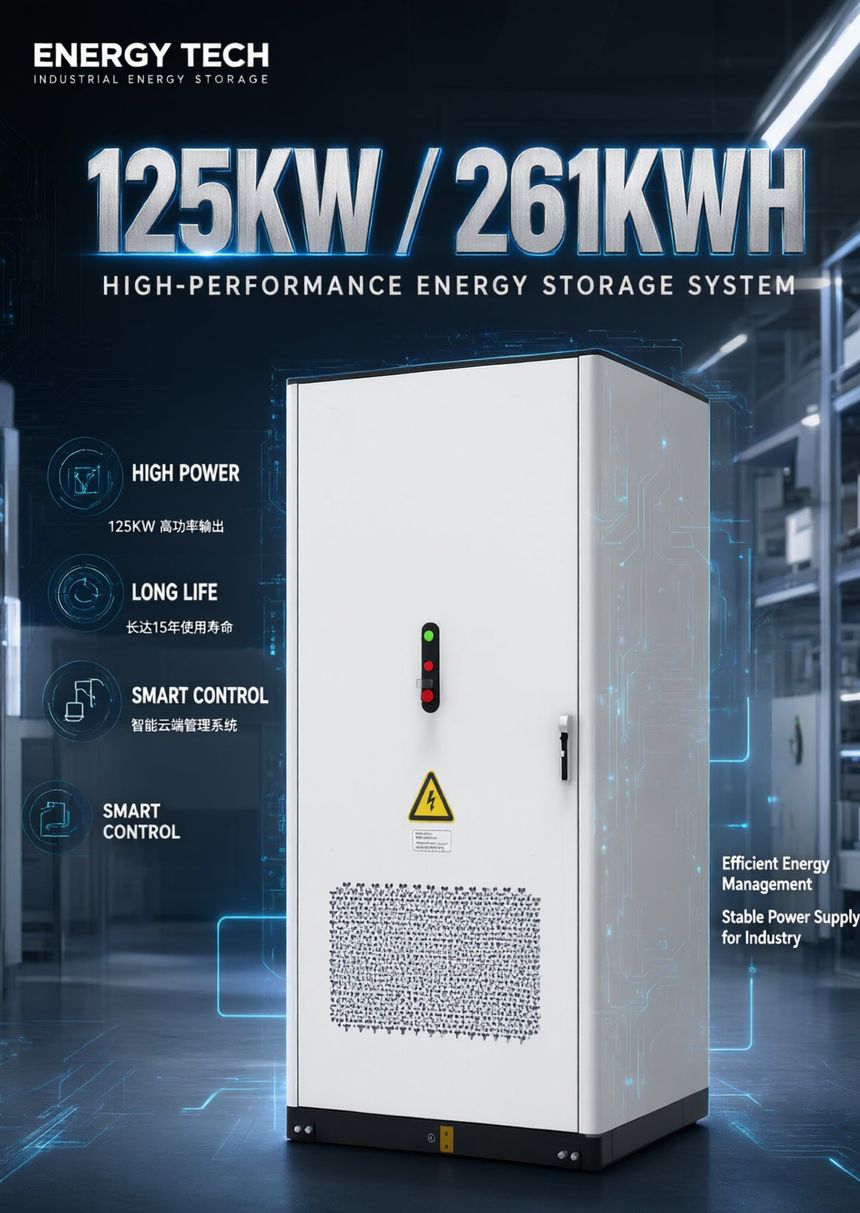
- A 261 kWh cabinet (125 kW PCS) covers it with headroom
- If peaks grow or run longer, the 418 kWh cabinet adds runtime at the same 125 kW power
The 250 kW / 488 kWh unit suits larger sites where both the shave (up to 250 kW) and the duration matter.
Three ways to
get it wrong.
Sizing to daily consumption
Total kWh per day tells you little about the peak. Two sites using 2,000 kWh/day can need completely different cabinets.
Ignoring future load growth
Modular cabinets parallel on site. Leave room to add a second unit rather than replacing the first in year three.
Forgetting the tariff structure
Some markets pay on demand charges, others on time-of-use spread. The right size depends on which one dominates.
Skipping the site survey
Grid voltage, cable runs, ambient temperature and fire Clearances all affect configuration. Give the supplier your single-line diagram.
Not sure which cabinet fits?
Send your half-hourly load profile and grid voltage — we will size the configuration and quote it.

