Solar plus storage
for industrial sites.
Rooftop PV generates when the sun is up; factories consume when production runs. Storage sits between the two — capturing surplus, releasing it at peak, and holding a reserve for outages.
One cabinet,
three jobs.
Solar self-consumption
Store midday PV that would otherwise be exported at a low feed-in tariff, then use it on-site in the evening.
Peak shaving
Discharge during the highest-tariff window to cut demand charges — often the largest line on a commercial electricity bill.
Backup power
Keep critical circuits alive through grid faults. An all-in-one cabinet includes the PCS and transfer logic needed for fast switchover.
Grid services
In markets with demand response, the same asset can earn revenue by responding to grid signals.
Add storage without
rewiring the plant.
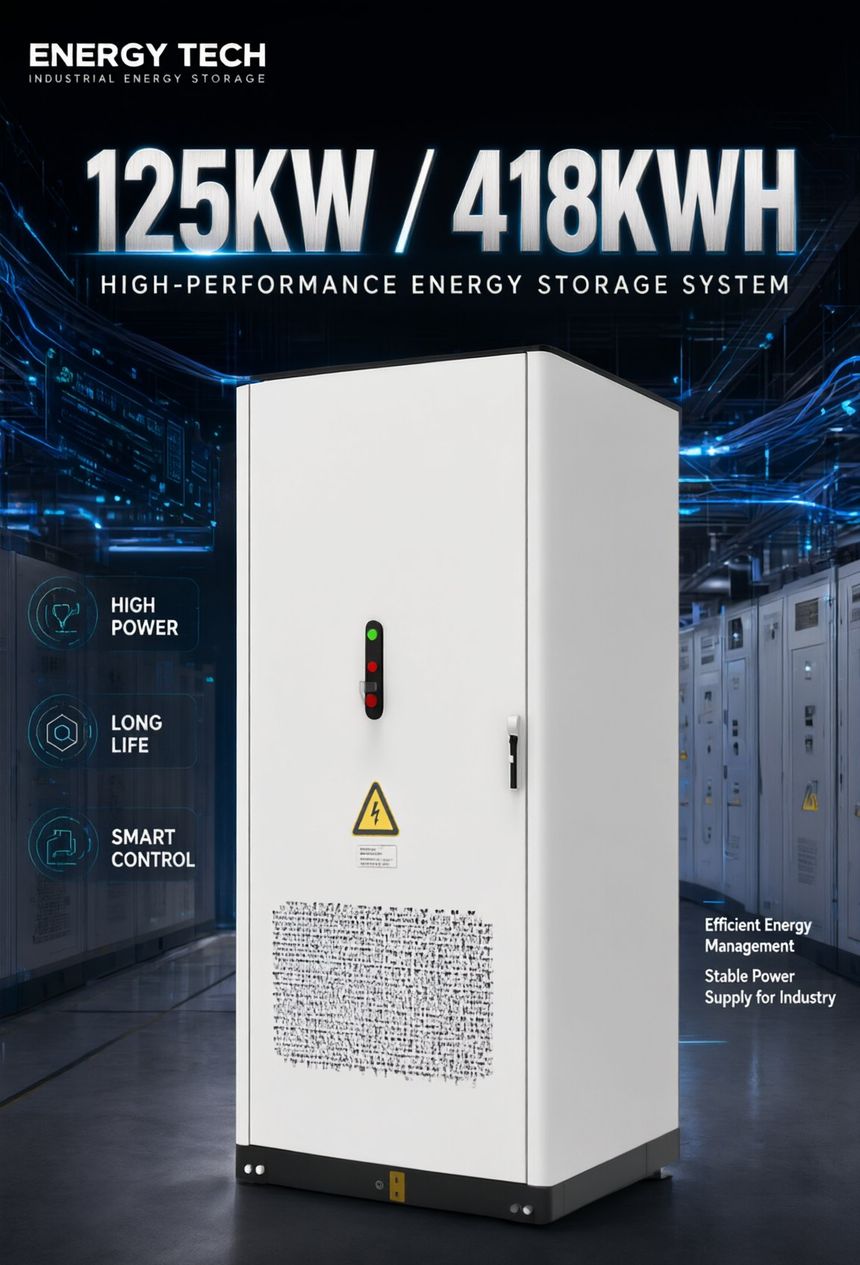
Because the battery, PCS, liquid cooling, fire suppression and distribution are integrated in one outdoor cabinet, a solar-plus-storage retrofit avoids the engineering of a split system.
- AC-coupled — works with existing rooftop PV inverters
- Skid-mounted: minimal civil work, fast commissioning
- Multiple cabinets parallel as the site grows
- EMS and BMS feed a cloud dashboard for remote monitoring
Matching the cabinet
to your PV array.
A 125 kW / 261 kWh cabinet pairs naturally with a small-to-medium rooftop array and a two-hour evening shift. Where daytime surplus or backup duration is larger, the 125 kW / 418 kWh unit adds energy without increasing the PCS. For sites running both a large PV field and high peak demand, the 250 kW / 488 kWh cabinet delivers more power and more storage in one unit.
Planning a solar-plus-storage project?
Share your PV size, load profile and grid voltage — we will propose a cabinet configuration.

